Mustard Microgreens Nutrition
Mustard microgreens are bold, peppery Brassica greens known for their spicy flavor, vibrant color, and concentration of vitamins, minerals, antioxidants, and sulfur-rich plant compounds. They are especially valued for vitamin C, beta-carotene, calcium, iron, phosphorus, glucosinolates, and natural antimicrobial plant compounds.
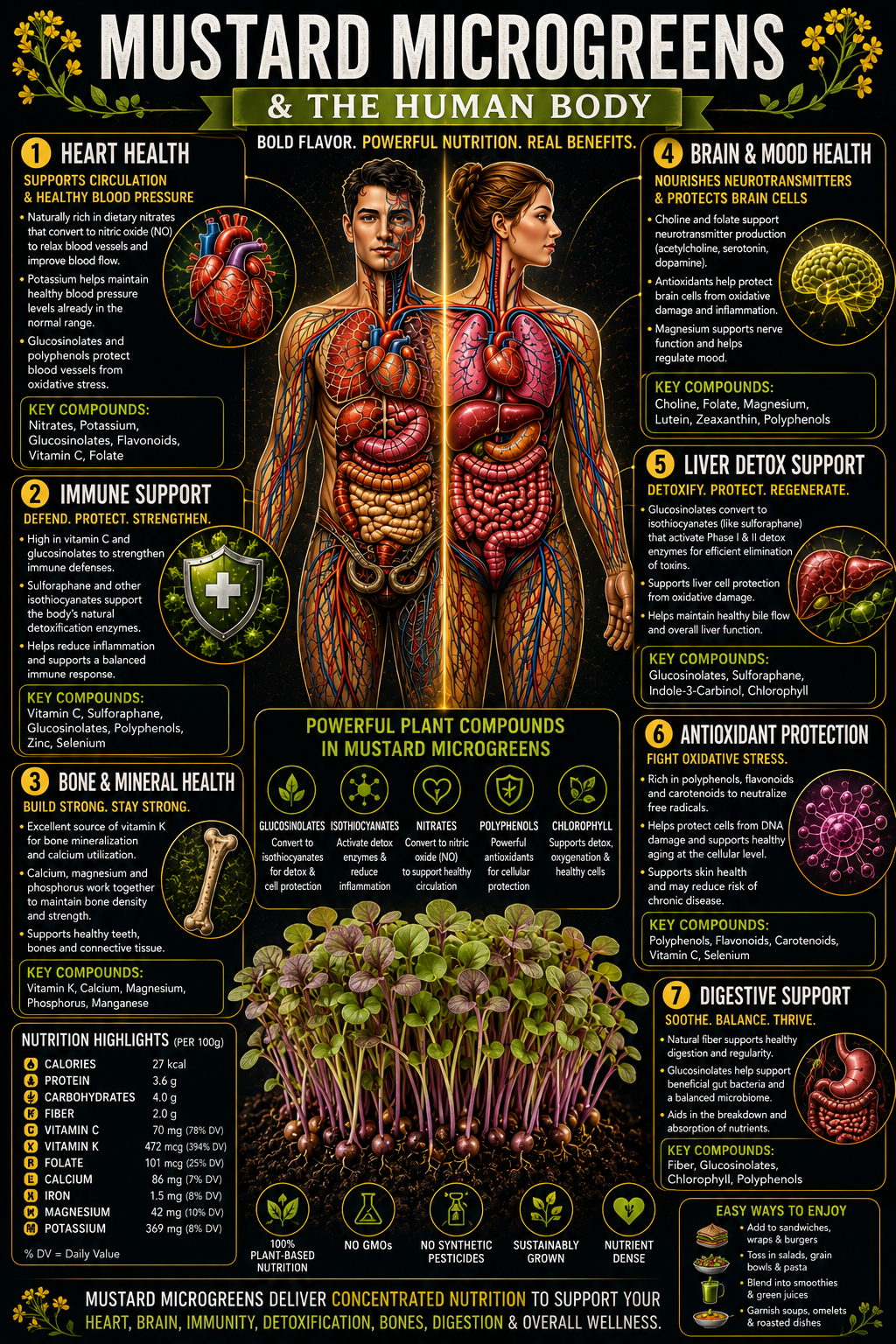
| Nutrient / Compound | Amount per 100 g | Category | Why it matters |
|---|---|---|---|
| Protein | 2.5–3.5 g | Macronutrient | Supports tissue repair, enzymes, and overall growth. |
| Dietary Fiber | 1.5–2.5 g | Macronutrient | Supports digestion, fullness, and gut health. |
| Vitamin C | 40–70 mg | Vitamin | Supports immune health, collagen production, and antioxidant defense. |
| Vitamin K1 | 250–500 µg | Vitamin | Supports blood clotting and bone metabolism. |
| Provitamin A (beta-carotene) | 4–8 mg | Vitamin precursor | Supports vision, immune function, skin health, and antioxidant activity. |
| Vitamin E | 2–5 mg | Vitamin | Helps protect cells from oxidative stress. |
| Folate (B9) | 60–120 µg | Vitamin | Supports cell growth, DNA synthesis, and red blood cell formation. |
| Potassium (K) | 350–550 mg | Major mineral | Supports fluid balance, heart rhythm, and nerve signaling. |
| Calcium (Ca) | 120–220 mg | Major mineral | Supports bones, muscles, and nerve function. |
| Magnesium (Mg) | 45–85 mg | Major mineral | Supports energy production, muscles, and nervous system function. |
| Phosphorus (P) | 70–130 mg | Major mineral | Supports cellular energy, bones, and teeth. |
| Sulfur (S) | High | Plant sulfur constituent | Supports Brassica glucosinolate chemistry and detox-support pathways. |
| Iron (Fe) | 1.5–3.0 mg | Trace mineral | Supports oxygen transport and energy levels. |
| Zinc (Zn) | 0.5–1.0 mg | Trace mineral | Supports immunity, wound healing, and enzyme activity. |
| Manganese (Mn) | 0.4–0.9 mg | Trace mineral | Supports antioxidant enzymes and metabolism. |
| Copper (Cu) | 0.1–0.3 mg | Trace mineral | Supports iron metabolism and connective tissue health. |
| Glucosinolates | High | Phytonutrients | Key Brassica compounds associated with detox-supporting pathways. |
| Isothiocyanates | Present | Phytonutrient derivatives | Formed when chopped or chewed; associated with cellular protection. |
| Sinigrin | Present | Mustard glucosinolate | Contributes to mustard’s spicy bite and sulfur-rich plant chemistry. |
| Chlorophyll | High | Plant compound | Supports natural cleansing and plant-based antioxidant activity. |
| Phenolic antioxidants | Present | Polyphenols | Contribute to antioxidant and anti-inflammatory activity. |