Dill Microgreens Nutrition
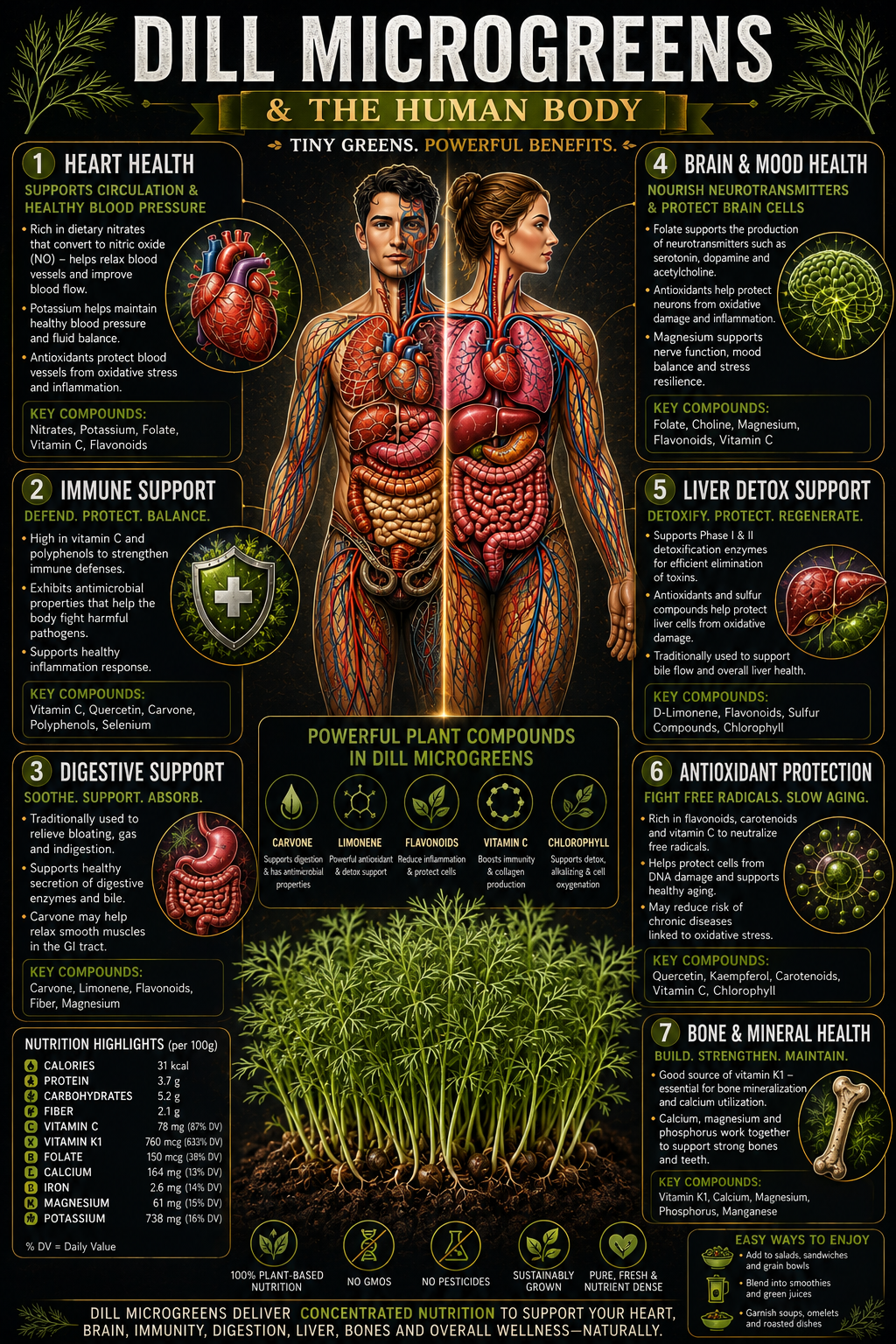
Dill microgreens are a delicate, aromatic herb rich in vitamins, minerals, and antioxidant compounds. Known for their digestive-supporting properties and calming phytochemicals, dill microgreens provide a refreshing nutrient profile that supports overall wellness. Nutrient levels can vary depending on growing conditions and harvest timing.
| Nutrient / Compound | Amount per 100 g | Category | Why it matters |
|---|---|---|---|
| Protein | 2.8–3.5 g | Macronutrient | Supports tissue repair and enzyme activity. |
| Dietary Fiber | 2.0–2.5 g | Macronutrient | Supports digestive health and gut balance. |
| Vitamin A (beta-carotene) | 6–8 mg | Vitamin | Supports vision, immune defense, and skin health. |
| Vitamin C | 40–85 mg | Vitamin | Supports immune function and antioxidant protection. |
| Vitamin K1 | 300–450 µg | Vitamin | Essential for blood clotting and bone strength. |
| Folate (B9) | 140–180 µg | Vitamin | Supports DNA synthesis and cellular growth. |
| Potassium (K) | 500–700 mg | Major mineral | Supports heart rhythm, fluid balance, and nerve signals. |
| Calcium (Ca) | 180–220 mg | Major mineral | Supports bone density and muscle function. |
| Magnesium (Mg) | 60–90 mg | Major mineral | Supports relaxation, muscle function, and energy production. |
| Phosphorus (P) | 80–110 mg | Major mineral | Essential for cellular energy and bone structure. |
| Iron (Fe) | 3–6 mg | Trace mineral | Supports oxygen transport and energy levels. |
| Zinc (Zn) | 0.8–1.2 mg | Trace mineral | Supports immune response and enzyme function. |
| Manganese (Mn) | 0.6–1.0 mg | Trace mineral | Supports metabolism and antioxidant systems. |
| Essential oils (carvone, limonene) | Present | Phytonutrients | Support digestion and provide antimicrobial properties. |
| Quercetin | Present | Flavonoid | Supports anti-inflammatory and antioxidant pathways. |
| Kaempferol | Present | Flavonoid | Supports cardiovascular health and cellular protection. |
| Chlorophyll | High | Plant compound | Supports detoxification and oxygen transport. |
| Phenolic compounds | Present | Polyphenols | Contribute to antioxidant capacity and cellular protection. |