Broccoli Microgreens Nutrition
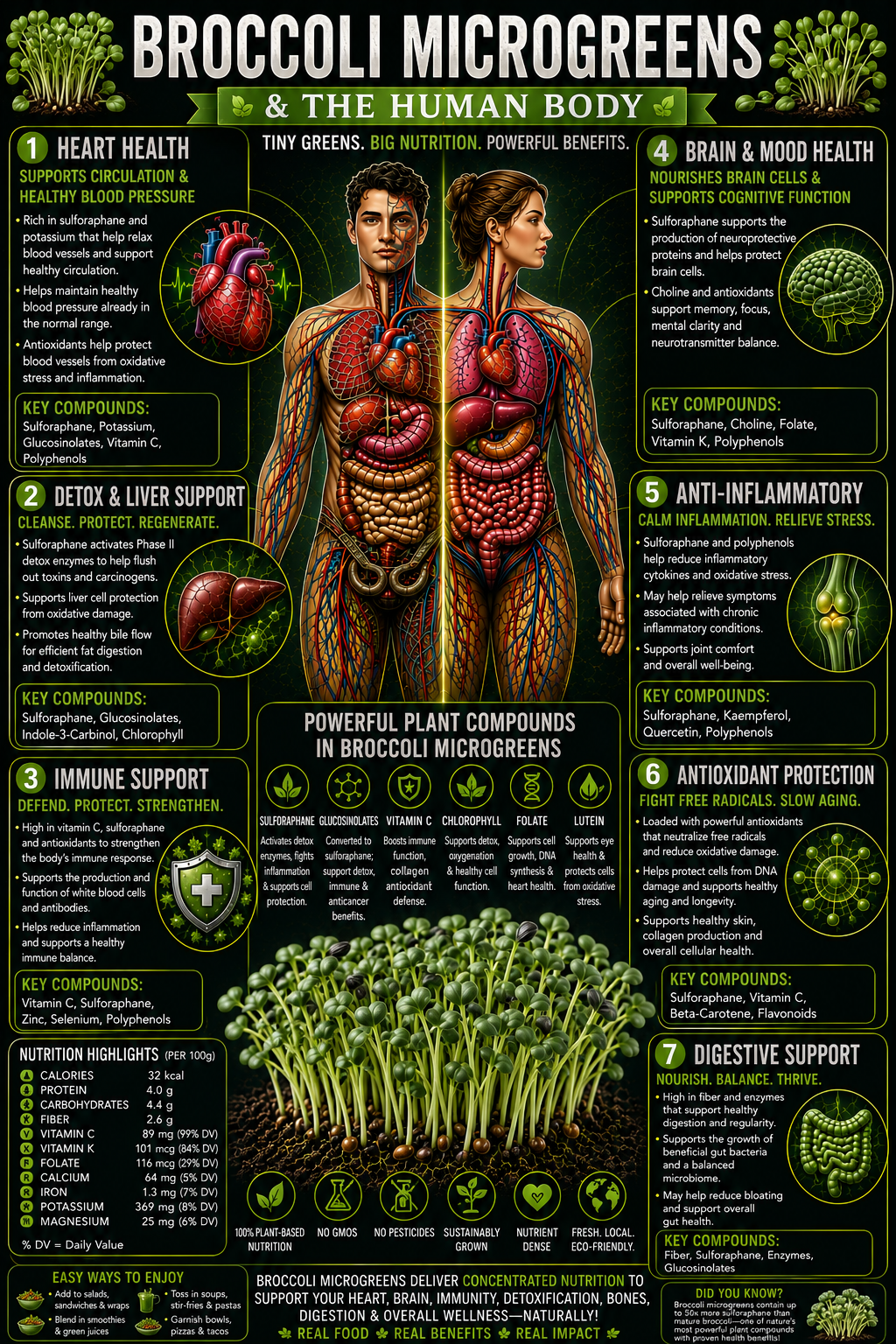
Broccoli microgreens are a nutrient-dense Brassica green known for their high antioxidant capacity and concentration of essential vitamins, minerals, and sulfur-based compounds. They are especially valued for glucoraphanin content, which can convert into sulforaphane when consumed fresh. Nutritional values vary depending on growing conditions, light exposure, and harvest stage.
| Nutrient / Compound | Amount per 100 g | Category | Why it matters |
|---|---|---|---|
| Protein | 2.34 g | Macronutrient | Supports tissue repair and enzyme production. |
| Dietary Fiber | 0.52 g | Macronutrient | Supports digestive health. |
| Vitamin E (alpha-tocopherol) | 5.08 mg | Vitamin | Important antioxidant that helps protect cells from oxidative stress. |
| Provitamin A (beta-carotene) | 5.35 mg | Vitamin precursor / carotenoid | Supports eye health, immune function, and antioxidant defense. |
| Vitamin C | Present (variable) | Vitamin | Supports immunity, collagen formation, and antioxidant protection. |
| Vitamin K1 | Present | Vitamin | Supports normal blood clotting and bone health. |
| Potassium (K) | 422 mg | Major mineral | Supports fluid balance, nerve signaling, and muscle function. |
| Phosphorus (P) | 76 mg | Major mineral | Supports bones, teeth, and cellular energy metabolism. |
| Calcium (Ca) | 59 mg | Major mineral | Important for bones, muscles, and nerve signaling. |
| Magnesium (Mg) | 40 mg | Major mineral | Helps with muscle function, nerve function, and energy production. |
| Sulfur (S) | 140 mg | Plant sulfur constituent | Supports glucosinolate and detox pathways. |
| Sodium (Na) | 66 mg | Mineral | Naturally occurring sodium; varies by growing method. |
| Iron (Fe) | 1.25 mg | Trace mineral | Supports oxygen transport and energy metabolism. |
| Manganese (Mn) | 0.51 mg | Trace mineral | Supports antioxidant enzyme systems and metabolism. |
| Zinc (Zn) | 0.73 mg | Trace mineral | Supports immune function and enzyme activity. |
| Copper (Cu) | 0.05 mg | Trace mineral | Supports iron metabolism and antioxidant enzymes. |
| Glucosinolates | High | Phytonutrients | Key Brassica compounds linked to detoxification pathways. |
| Glucoraphanin | High | Phytonutrient | Primary precursor to sulforaphane. |
| Sulforaphane potential | High (when activated) | Phytonutrient derivative | Formed when chopped or chewed; supports cellular defense. |
| Lutein / Zeaxanthin | Present | Carotenoids | Supports eye health and antioxidant protection. |
| Phenolic antioxidants | Present | Polyphenols | Contribute to overall antioxidant capacity. |